

A practical, easy-to-follow guide to help destinations make their tourism data interoperable, comparable and ready for the new European data ecosystem — with the support of iris360.
Key Takeaways
This whitepaper turns two key UNE standards into something practical and usable for day-to-day destination management. It explains, in simple terms, how to work with UNE 178502 (indicators) and UNE 178503 (semantic representation), and how iris360 helps put them into practice.
You’ll learn:
- How to define and structure indicators following UNE 178502
- How to express them semantically in JSON or JSON-LD using UNE 178503
- Why semantic data matters and how it enables true interoperability
- Practical examples such as “average stay” or “innovation resources”
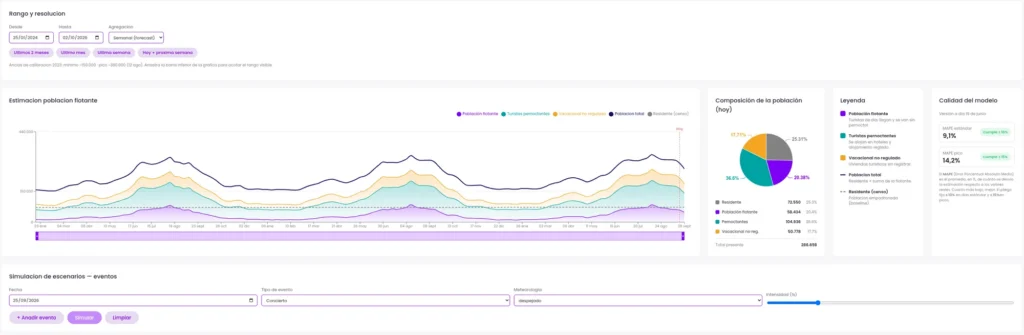
- How iris360 turns your indicators into dashboards, APIs and reusable datasets
- What NEM is, and why metadata matters when geospatial information is involved
- How all of this prepares destinations for initiatives like SEGITTUR’s PID and data spaces such as GeoSpaceData and LDT-DS
Who this whitepaper is for
This guide is designed for:
- Smart tourism destination managers
- Data and innovation teams
- Public-sector organisations working in tourism
- Integrators, consultants and technology partners
- Tourism Data Analysts
What’s included
- An overview of the UNE framework and where 178502 / 178503 fit.
- A step-by-step explanation of how to define and semantize indicators.
- Examples in JSON and JSON-LD.
- A simple view of how iris360 implements these standards.
- The connection with SEGITTUR PID and data spaces.
- A short introduction to NEM and geospatial metadata.
From theory to practice
From intuition to data. Víctor Badorrey explains how to automate standards compliance and apply semantic normalisation with iris360 for efficient public management.
The value of using iris360
iris360 makes it easier to apply the UNE standards by offering:
- Automated ingestion of different data sources
- A semantic layer that converts indicators into JSON-LD
- Dashboards aligned with the UNE model
- Open APIs already prepared for NGSI-LD
- Connectors to data spaces like GeoSpaceData and LDT-DS
What used to be a static Excel becomes part of a living, interoperable data ecosystem.

 Español